
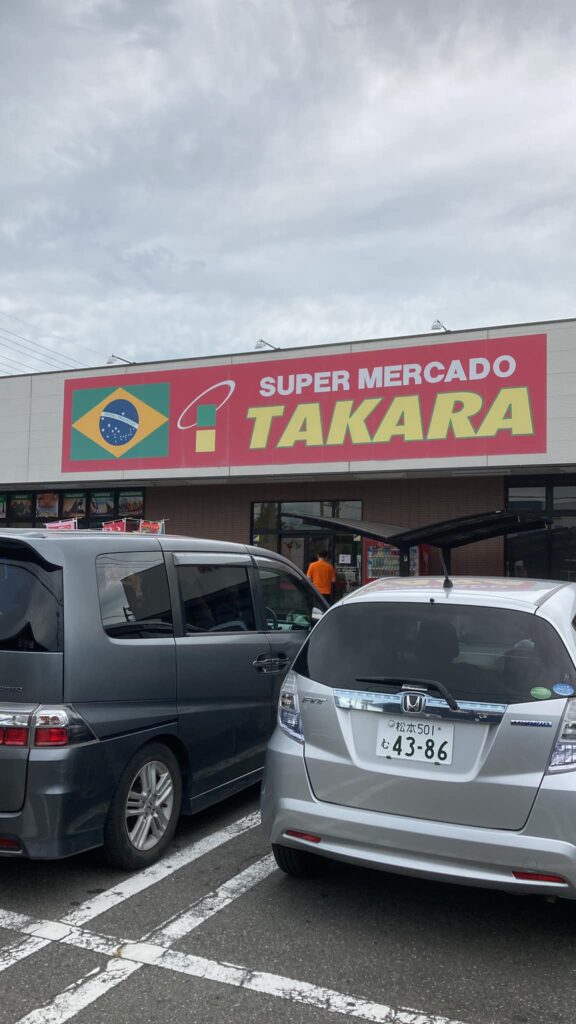
The other day, I visited a Brazilian community in Gunma with a friend. Wow, from the selection of goods to the atmosphere, it felt like I had come to a foreign country, it was the best. (Multiculturalism is comfortable, isn't it? My lungs expand to inhale that kind of 'energy'.)
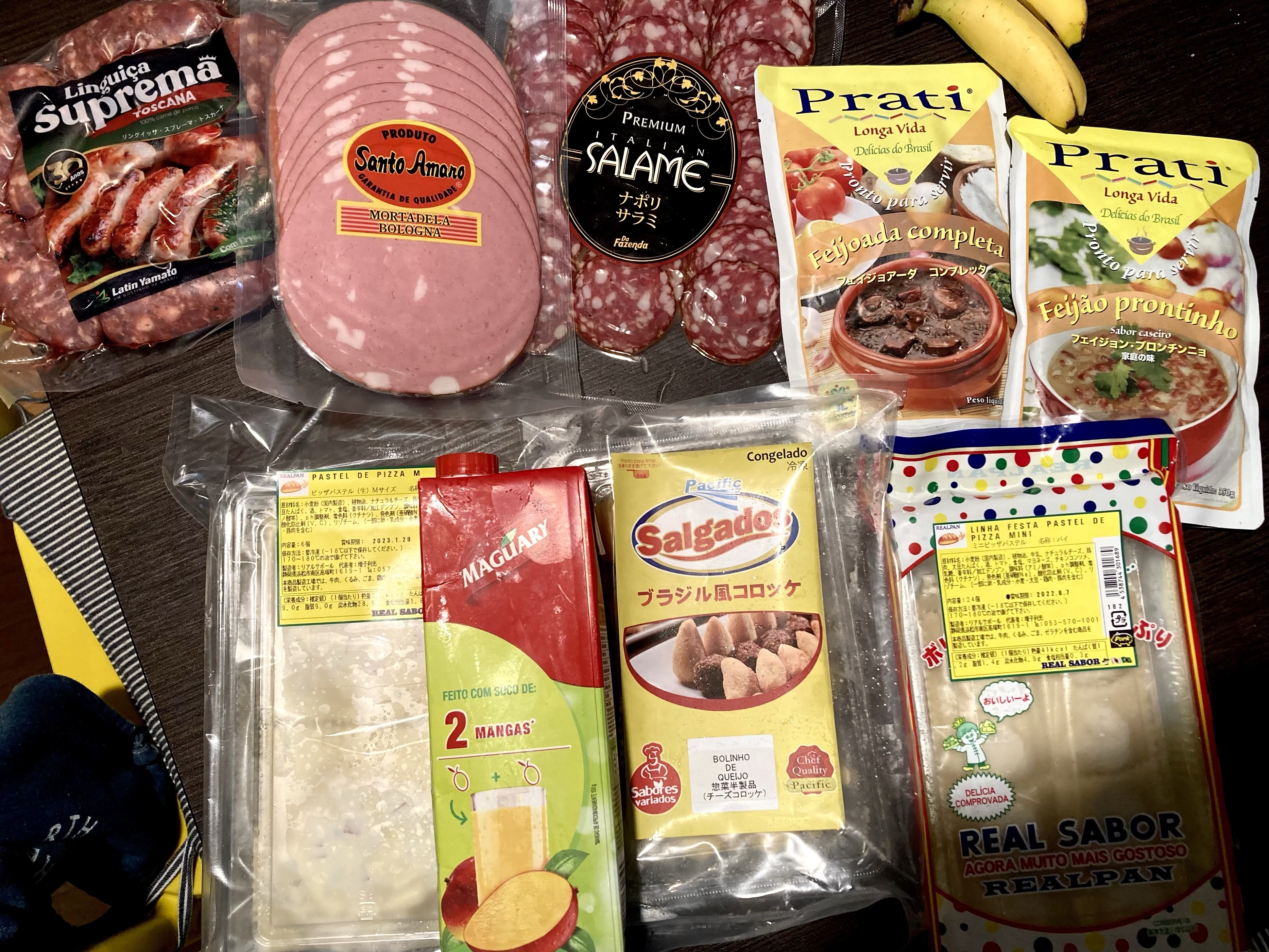
But then, I accidentally knocked over two large juice boxes from the shelf inside the store. The lids came off, the juice spilled out, and the floor got wet...
Seeing my friend pick up the juice and wipe the floor while saying, "Oops!! I'm so sorry"
"It's okay!" said the Japanese-Brazilian auntie (with "MOM" embroidered on the shoulder of her polo shirt, which was kind of cute), and she rushed over and started wiping the floor.
The thought of "I have to compensate for this" crosses our minds, but the auntie at MOM immediately kept saying, "It's okay!" This means we don't need to compensate! Kindness and atmosphere with 'ma' From the bottom of my heart, "OBRIGADO"
This often happened when I lived in Hawaii. The families of the Japanese-Americans I met were tolerant and kind. They always accepted me with ample space. When I went to old restaurants in Hawaii, many elderly Japanese-Americans would talk to me kindly. Although they no longer spoke Japanese, they spoke English, and looking back later, I'd think, "Wait, what language was I speaking with that auntie?" It was common to experience moments where language ceased to matter, where you'd wonder what language you were even speaking.
Is it the same in rural Japan even now? Or is the idea that rural areas have warmth just a stereotype?
What I think relatively is that Tokyo (though I can't generalize) is somehow different. There's no breathing room. It seems that only by following self-imposed discipline (manuals) is considered "good," and they often impose discipline on customers. "Thank you" and "Welcome" also sound like they are delivered without any breathing room under the rules that those people likely established. Is it just me who hears it that way? Customers, on their part, are often concerned only with quantitative aspects like speed and price, and there are many "vulgar" people who act like special forces for writing bad reviews, leading to a tense atmosphere.
For either side, of course, negotiations and communication are about conveying your conditions to the other party, but the key is "how" you can "express" it, rather than "what." Therefore, Ma (space/emptiness) was the KEY this time
What is it, that atmosphere of 'ma', that enveloping kindness...
I think that not only within the Japanese-American community, but in the environments where they were born and raised, there's likely a belief in the inherent goodness of people, a "let's try to trust" mentality, that has continued to live on in the community. Conversely, in places where this belief in inherent goodness is absent, there's no initial mindset of trying to trust, so both store staff and customers might impose their respective "rules" on others, thinking, "There's no common sense, no basic decency."
It's probably about "customers are valuable" for the "MOM auntie" in Brazil, but they aren't just giving things away for free indiscriminately to anyone. However, there's something... Root about solid business, and As a person You can glimpse the kindness... That's why I, coming from outside, want to go again, and the locals will continue to visit. I think it's wonderful.
It was a day to think about various things, such as what kind of person I want to be, as a realization or a lesson.