
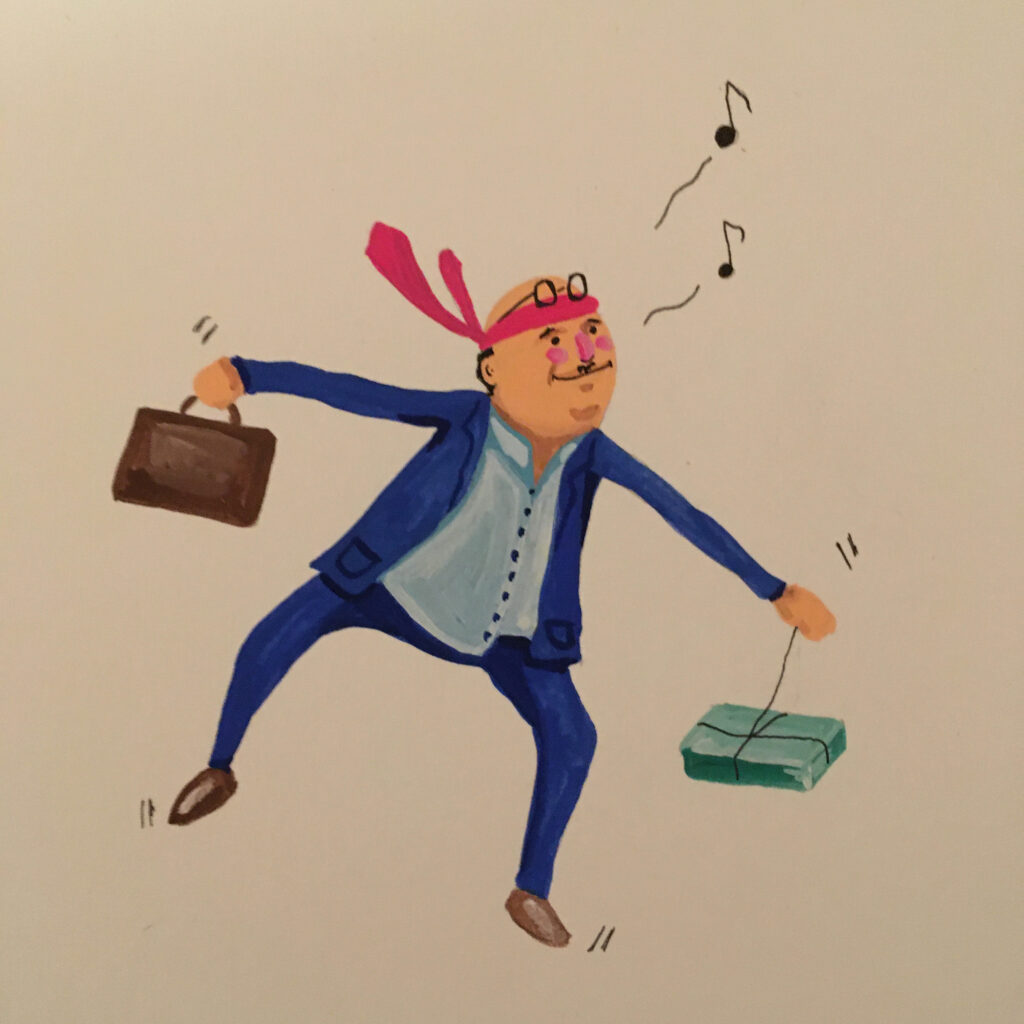
Just a Thought
I have been thinking about various things lately. Many people in Japan live within the social status of being 'company employees.' Meanwhile, though I have many friends like this, people with high standards in Japan also live while being fully aware of their own work history, skill sets, and portfolios, and they understand how their individual abilities connect and reflect in society. Although it is not mainstream, professional awareness does exist. In addition, there are artisans such as carpenters and chefs; professionalism exists here as well, though it might not be mainstream either.
A story from my time in America
Japan has become a society where many people have become company employees, leading to stable lives. Many people have worked hard, believing in the mantra, 'Get into a good school, get into a good company.' As a result, perhaps a stable society was born where truly many people became company employees.
On the other hand, in the US, based on my own experience, when it comes to companies, there was an impression of what you might call 'jungle rules: eat or be eaten.' In a world where employees can be fired at any time and there is competition where people pull each other down, everyone desperately earns certifications and learns knowledge. I felt that there was a sense of tension and preparation for the answer to the question, 'What kind of professional are you exactly?' (The ultimate example was when I was facilitating coaches for the NFL, the professional American football league, where I felt a glimpse of that abnormally intense severity and tension.)
In English, if you are asked what your occupation is, the answer 'I am a company employee' rarely comes back. I feel that talk about specific industries or one's own skills was often included. In other words, they pay proper attention to professionalism, and I think there is an awareness that 'this is how I make my living.'
A story about Italy
Italy is interesting. First of all, the tax registration categories differ depending on the type of occupation. For example, the tax system for people who do not actually make things, such as consultants, is different from that for people who manufacture things. Therefore, the divisions of professional occupations are linked to the tax system. So, unlike in Japan, you cannot just say, 'I will become an artist starting tomorrow!' and start painting and selling your work; you must first talk to an accountant and set up how to pay taxes. The tax laws for professional occupations are also very different from those in Japan.
And! The reason why I said it is interesting is that everyone respects each other's professions to some extent.
In Sicily, in particular, there are not many people like Japanese company employees, and there are many people who actually create and produce things. If you hear 'I am a chef,' everyone respects them. 'I am a farmer,' everyone respects them. 'I am a painter,' everyone respects them too.
For example, locally speaking, farmers come around selling vegetables and fruits on the streets from small trucks, and the professionalism of these people is naturally respected and loved by the townspeople. It feels like everyone has a strong sense of professionalism (personal subjective view). Many people work independently, and of course it goes without saying that they must do high-quality and good work, but if they do, work is generated through introductions within their peer social network. Rather than the Japanese style of immediately calling 'Company X for plumbing and water leak jobs!', everyone knows individual professionals and contacts them directly. Therefore, since everyone has a specialty, respect for other specialties naturally arises, and I feel that kind of relationship exists.
Now, let's bring it back to Japan...
I think the choice to be a company employee is wonderful. You go through rigorous screening to join a company, support your families, and everyone is engaged in their work.
However, I think the fact that many people have created an average, stable environment—without the worry of being fired and with guarantees—has also created a downside. I have seen it many times myself: there is often a gentleman's agreement not to point out issues to each other, even when they are glaring. People with the professional knowledge and experience to solve those issues are often not welcomed as they are seen as factors that disrupt the status quo. I have felt that the so-called 'nail that sticks out gets hammered down' exists even more than the stereotype suggests.
The appearance of someone who points out things others don't know or offers constructive criticism, or introduces new knowledge—no matter how correct it is—means that if they say such things, our peaceful daily lives will change, we will have to study new things, and it invites an uncomfortable situation. It might even create a new competitive factor starting tomorrow.
I was once sent on a business trip from an American company to do consulting sales for many Japanese companies, and I was quite disliked (though it might have been a problem with my personality! Haha). Many of them tried to show off and defend their past experiences and knowledge to the death. (As an aside, even when they went to the trouble of calling in someone with overseas professional expertise, for some reason the hostility was directed at me, the facilitator—it's an interesting story. That is how strong the rejection reaction always was.)
So, what will you do, Japan?
Despite the internal desire for a stable life as a company employee, I see that the day is approaching when external pressures—such as 30 years of economic stagnation, a declining birthrate, and labor shortages—will force society to change. The possibility that a 9-to-5 job will no longer guarantee a stable life has emerged. As for a solution, I think it is simple. First, we must all promise not to look away from the issues, to solve them concretely, to set schedules, to respect expertise, to learn, and to challenge ourselves. We must decide to do so.
Simply put, I wonder if such trivial promises might one day create a major positive change in society...
That is how I feel these days.